15+ Composite Functions Domain
Composite Functions Domain. Review examples of these concepts to see how different domains predict the range of. Consequently, the composition also cannot pick up the value of +2.

We believe this nice of find composite function graphic could possibly be the most trending subject past we allowance it in google gain or facebook. So the domain for the composite function is also x ≤ 3. In other words, given the composite f(g(x)), the domain will exclude all values where g(x) is undefined, and all values where f(g(x)) is undefined.
cle a tube pour mitigeur coiffure boheme chic facile combles amenages suite parentale coussin chaise haute bebe confort omega
Functions and graphs. Chapter 2. Combinations of functions
The composite of two functions f(x) and g(x) must abide by the domain restrictions of f(x) and g(x). Let's look at an example where domain restrictions apply. The domain of composite functions g (f (x)) is always dependent on the domains of the g (x) function and the domain of the f (x) function. As we discussed previously, the domain of a composite function such as [latex]f\circ g[/latex] is dependent on the domain of [latex]g[/latex] and the domain of [latex]f[/latex].

The domain of composite functions to calculate the domain of a composite function gf(𝑥): For instance, the function given by is the composition of with where and that is, basically, to “decompose” a composite function, look for. Domain of a composition of. This algebra 2 and precalculus video tutorial provides an introduction basic overview / review on composite functions that.
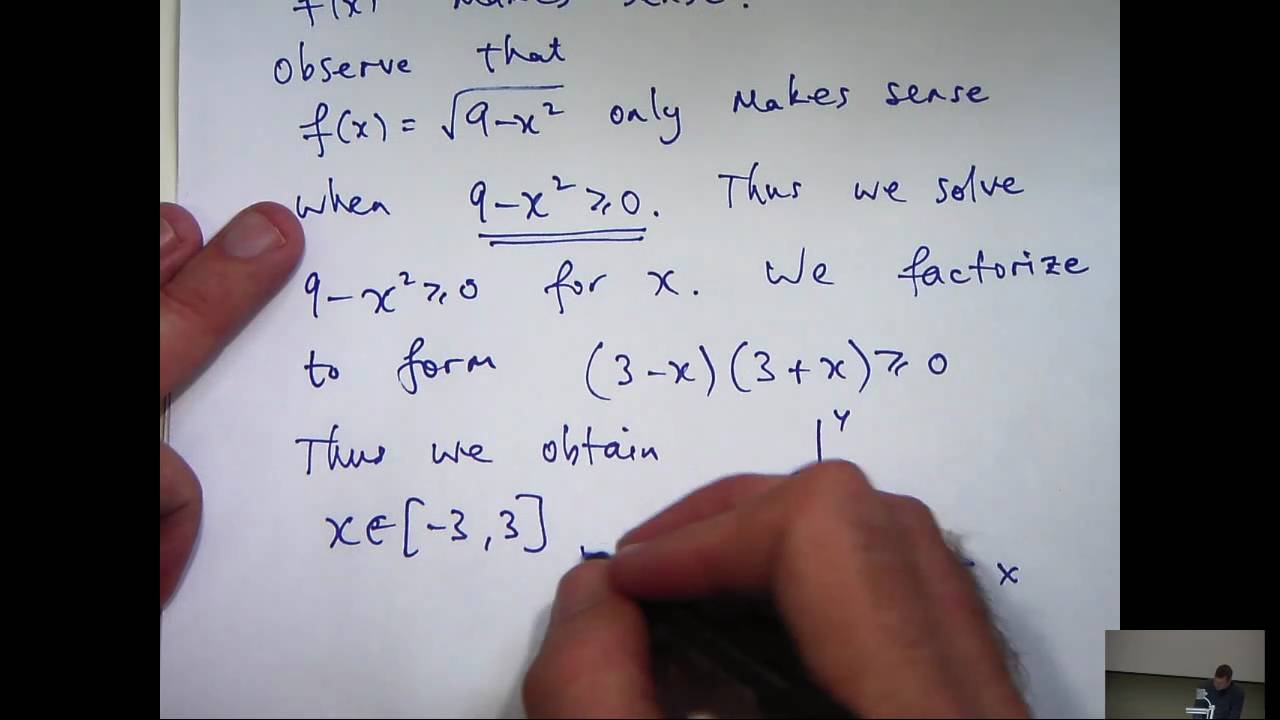
Find the values that are excluded from the domain of the outer function, g(𝑥). To calculate the domain of a composite composition (f∘ g)(x) ( f ∘ g) ( x): The domain of a composite function [latex]f\left(g\left(x\right)\right)[/latex] is the set of those inputs [latex]x[/latex] in the domain of [latex]g[/latex] for which [latex]g\left(x\right)[/latex] is in the domain of [latex]f[/latex]. Just as.

The answers coming out of function g ( x) come out in the form. It is important to know when we can apply a composite function and when we cannot, that is, to know the domain of a function such as [latex]f\circ g[/latex]. We believe this nice of find composite function graphic could possibly be the most trending subject past.
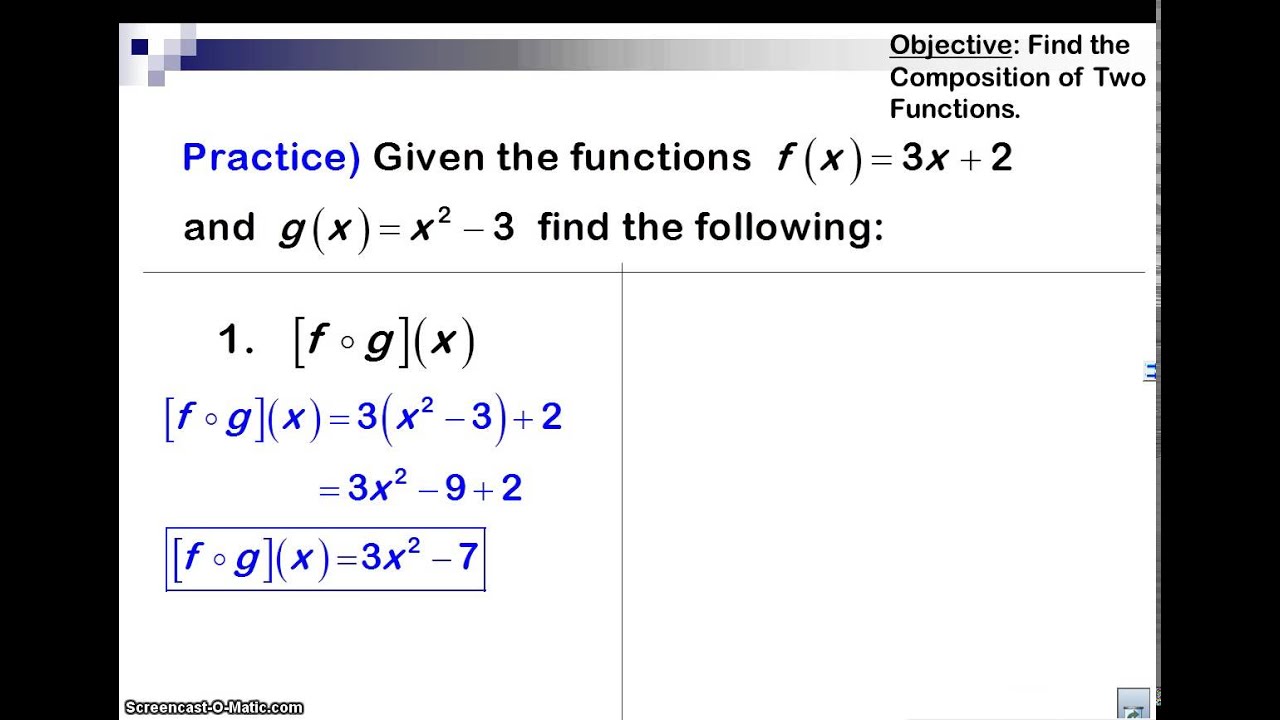
The input function f(x) has no restrictions, so the domain of g(f(x)) is determined only by the composite function. Let's look at an example where domain restrictions apply. In the example above, both functions had domains of all real numbers, so their composite functions did not have any domain restrictions either. So for f ( g ( x)) to be.

Thanks to all of you who support me on patreon. R − { 3 / 2 } r − { 5 / 2 }, f: To calculate the domain of a composite composition (f∘ g)(x) ( f ∘ g) ( x): Let’s examine what happens to values as they “travel” through a composition of functions. In other words, the function.
Let’s examine what happens to values as they “travel” through a composition of functions. Review examples of these concepts to see how different domains predict the range of. Thus x ≠ 2 3 as well. Thus domain of f ( g ( x)) will be r − { 3 2, 2 3 }. R − { − 2 } r.

The domain of a composite function [latex]f\left(g\left(x\right)\right)[/latex] is the set of those inputs [latex]x[/latex] in the domain of [latex]g[/latex] for which [latex]g\left(x\right)[/latex] is in the domain of [latex]f[/latex]. Finding domains of composite functions. We identified it from honorable source. The input function f(x) has no restrictions, so the domain of g(f(x)) is determined only by the composite function. We believe.

As we discussed previously, the domain of a composite function such as [latex]f\circ g[/latex] is dependent on the domain of [latex]g[/latex] and the domain of [latex]f[/latex]. The domain of a composition will be those values which can move through to the end of the composition.the obstacle is whether all of the values created by g(x), in this case, can be.